Outsourcing mobile app development has become one of the most practical strategies for startups, SMBs, and even enterprises looking to build high-quality mobile applications without the heavy cost and complexity of in-house teams.
Yet, despite its popularity, many businesses still feel uncertain about what outsourcing mobile app development really involves, how much it costs, and how to avoid common risks.
This in-depth guide is designed to remove that uncertainty. Whether you are a founder validating your first app idea, a product manager scaling an existing product, or a business owner exploring global talent, this article will help you outsource mobile app development confidently, strategically, and safely.
To outsource mobile application development means hiring an external team — an agency, a dedicated development team, or freelancers — to design, build, test, and sometimes maintain your mobile application instead of developing it internally. This can include:
Mobile app development outsourcing does not mean losing control. When done correctly, it gives you access to specialized expertise, faster execution, and predictable costs — often with better outcomes than in-house development.
From my experience working with founders and agencies across different regions, the motivation to outsource usually comes down to five core reasons:
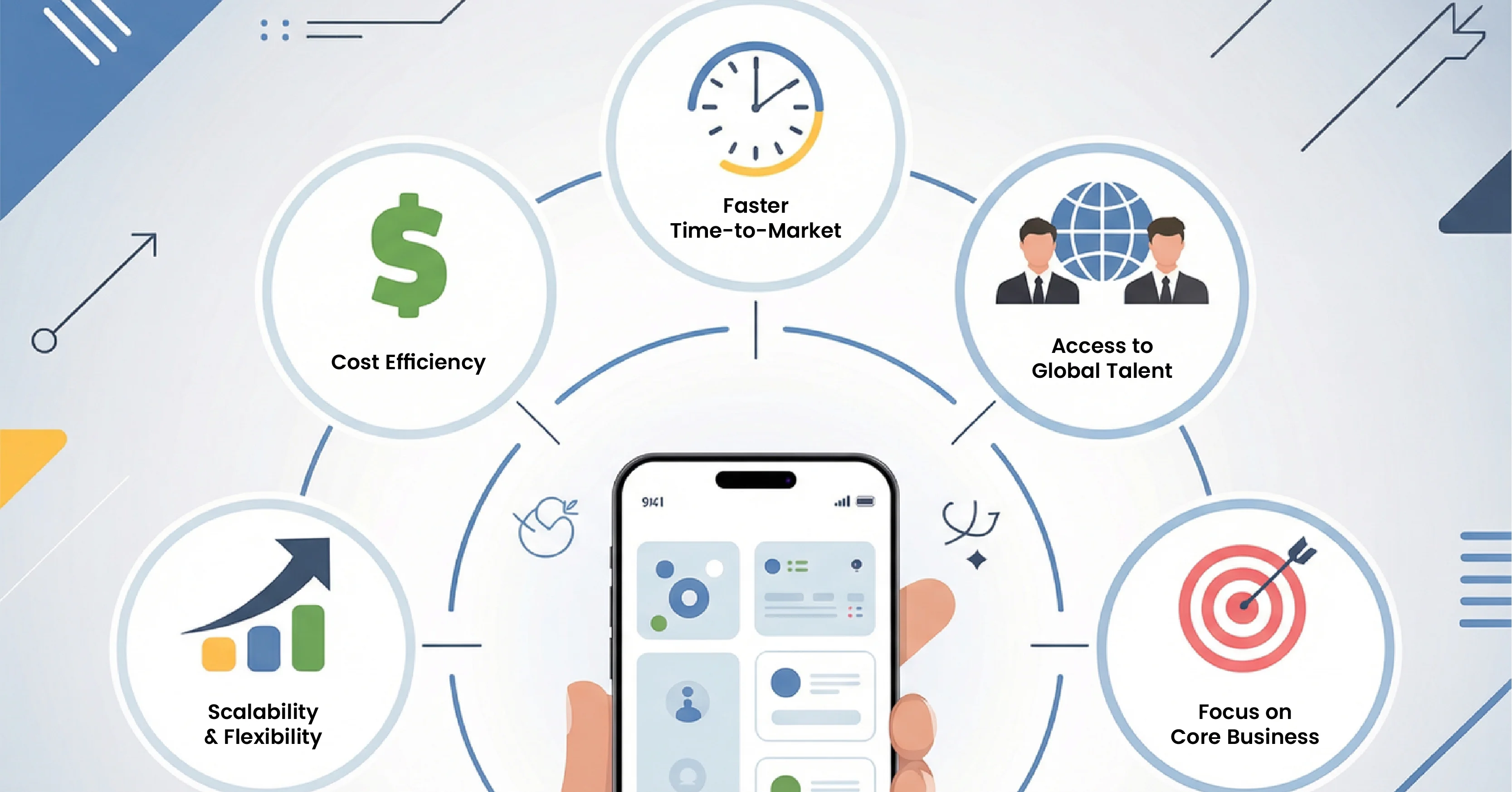
Benefits of Outsourcing Mobile App Development
While cost is often the headline, the benefits of outsourcing mobile app development go much deeper:
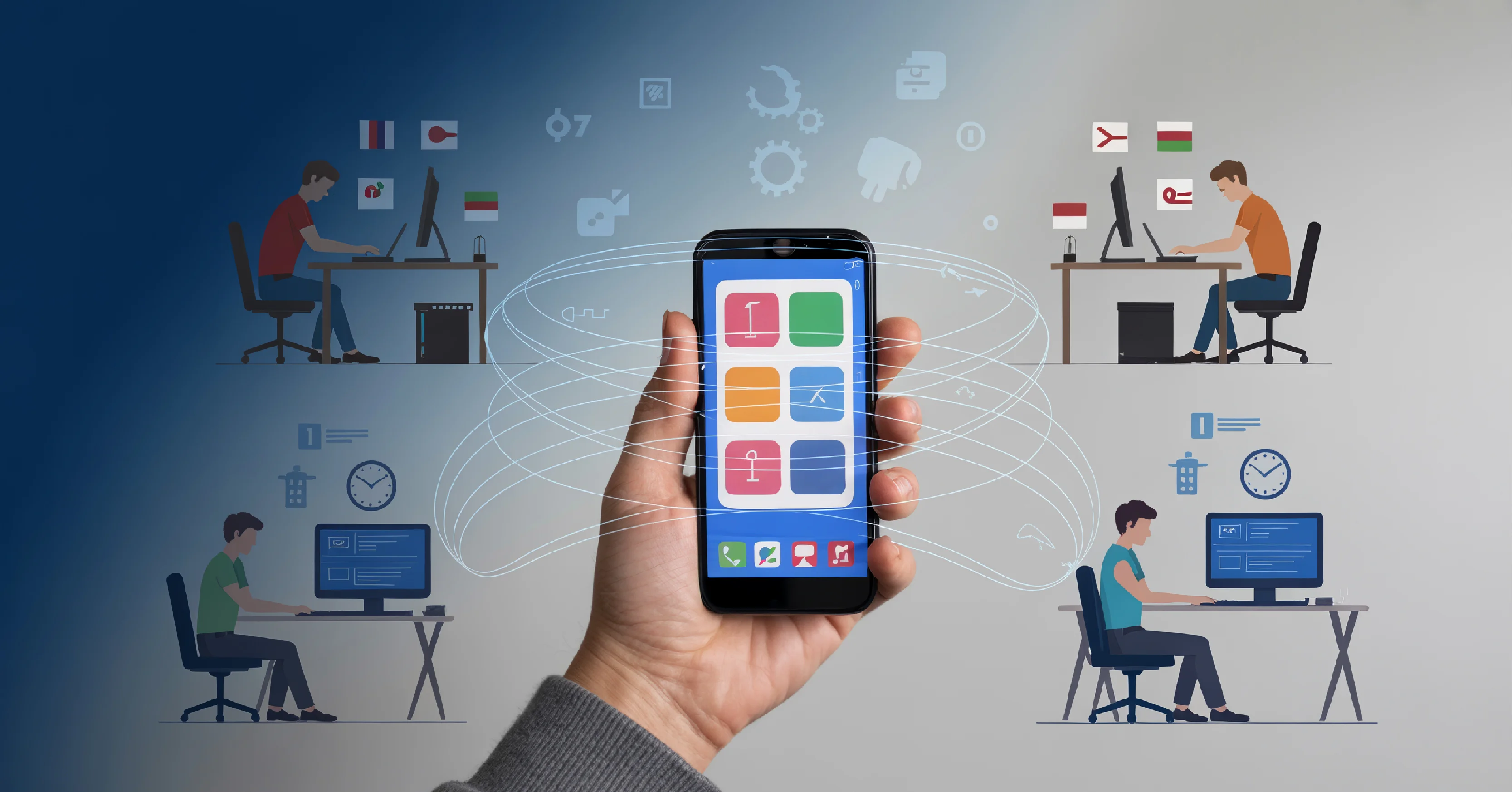 Many businesses that initially try to build apps internally end up outsourcing later — often after realizing how complex mobile ecosystems really are.
How Much Does It Cost to Outsource an App?
This is one of the most common questions — and the most misunderstood. The average cost to outsource mobile app development is listed in the table below.
|
|
|
|
|
|
|
|
|
|
|
|
The average cost of outsourcing depends on various factors, such as:
It mainly depends on your hiring model. If you hire:
Freelancers can work well for small projects, but agencies offer better reliability, documentation, and accountability for long-term products.
Understanding regional cost differences is critical when deciding where to outsource mobile application development. Below is a realistic, experience-based comparison of popular outsourcing destinations, including quality expectations, communication standards, and ideal use cases.
Outsourcing mobile app development in the United States is the premium option. US-based agencies and development teams offer deep product-thinking capabilities, strong business alignment, and minimal communication barriers.
Many mature companies adopt a hybrid model, combining US-based product leadership with offshore or nearshore development teams to balance quality, cost, and speed.
India remains one of the most popular destinations due to cost-effectiveness and a massive talent pool.
Pakistan offers excellent value with strong English communication and modern tech stacks.
Vietnam is rapidly emerging as a tech hub with disciplined teams.
The Czech Republic is ideal for companies needing EU-based compliance and senior engineers.
Each model has trade-offs between cost, communication, and control.
Here is what you should do while outsourcing your mobile app to the right partner.
When people ask why outsourcing fails, the answer is rarely technical — it is partner selection. Here is what you should look for:
This is where KodersPoint stands out. It is a leading mobile app and web development company you can trust. Avoid vendors that promise unrealistically low prices or guaranteed timelines.
Best practices:
Transparency solves 80% of outsourcing anxiety.
Common hidden costs include:
Mitigation strategies:
Protect your app by:
Professional outsourcing teams expect and respect these safeguards.
Yes — but with caution. Fiverr works best for:
For full-scale apps, Fiverr lacks accountability and long-term reliability.
Absolutely. Many founders outsource development while retaining ownership and monetizing via:
Outsourcing accelerates execution — you still control the vision.
Ionic is cost-effective for cross-platform apps. It is best for:
Outsourcing Ionic development reduces cost while maintaining performance for many use cases.
Common Risks in Mobile App Development Outsourcing
The table below shows potential risks and ways to fix them.
|
|
|
|
|
|
|
|
|
|
|
|
|
|
|
If you want speed, flexibility, and access to global expertise, outsourcing is not just an option — it is often the smartest decision.
The key is choosing the right partner, setting realistic expectations, and staying involved without micromanaging.
When done correctly, outsourcing mobile app development transforms ideas into scalable, revenue-generating products — without the stress and overhead of building everything in-house.
How do I outsource an app safely?
To outsource an app safely:
Clear documentation and transparency are the strongest safeguards.
How long does it take to outsource and build a mobile app?
A typical outsourced mobile app project takes:
Timelines vary based on scope, feedback cycles, and team size.
Can I outsource only part of mobile app development?
Yes. Many businesses outsource specific components such as:
This hybrid approach offers flexibility while retaining internal control.
Is outsourcing mobile app development cheaper than in-house development?
In most cases, yes. Outsourcing eliminates hiring costs, employee benefits, infrastructure expenses, and long-term commitments — making it significantly more cost-effective for many businesses

Let's talk about your tech solutions.