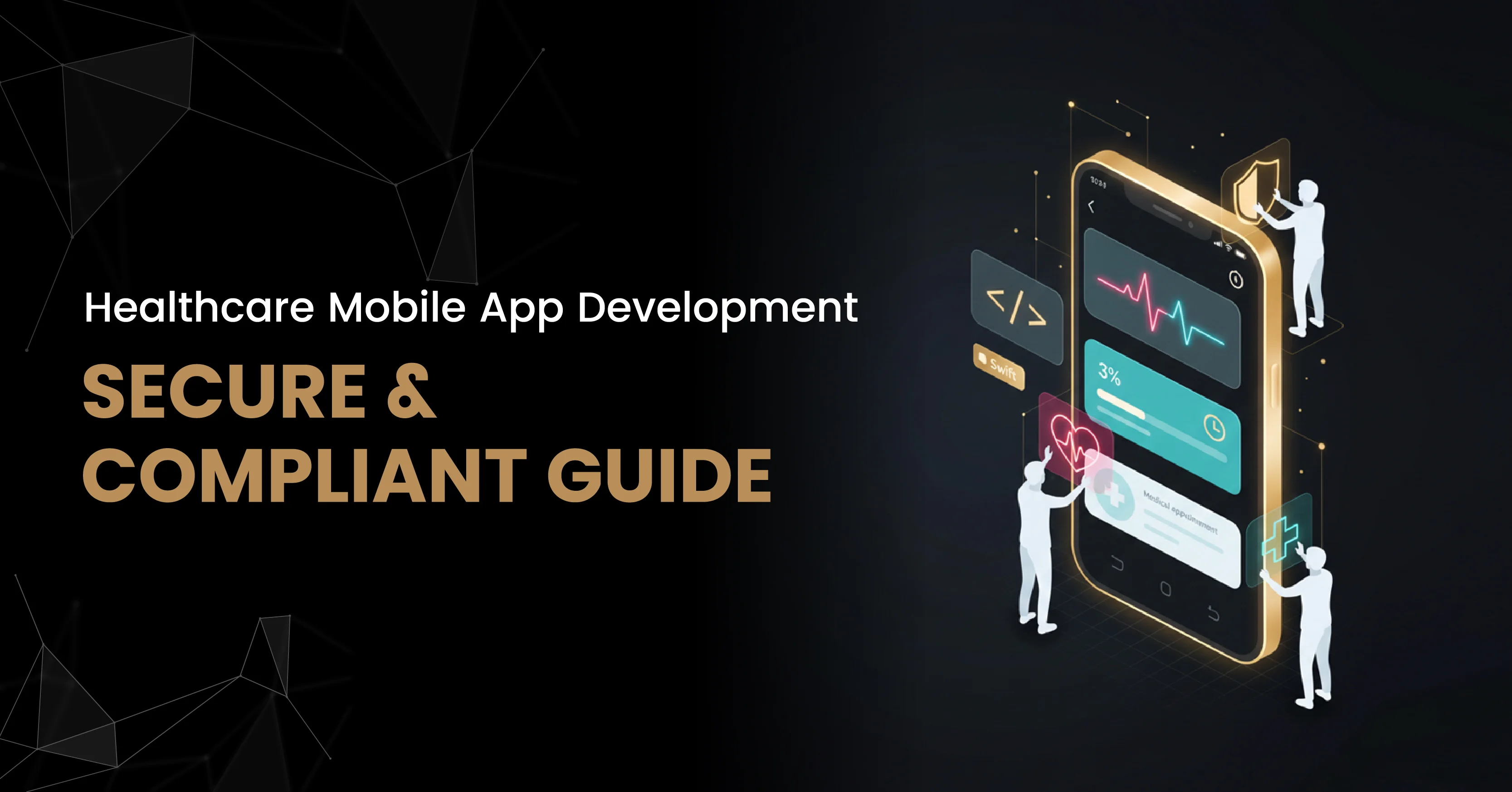
Healthcare mobile app development is transforming patient care, provider workflows, and medical research. Whether you want a telehealth platform, an EHR-integrated patient portal, or a fitness-to-clinical bridge, building a safe and effective healthcare app demands deep domain knowledge, strict security, and thoughtful UX.
This guide covers the key challenges, practical solutions, cost expectations, and regulatory considerations to help businesses evaluate healthcare mobile app development services and choose the right healthcare mobile app development company or healthcare mobile app developers.
What Healthcare Mobile App Development Really Involves?
Healthcare mobile app development covers design and engineering for iOS and Android, backend architecture, integrations with EHRs and wearables, and compliance with regulations like HIPAA and GDPR. Common project types include:
Use phrases people search for like healthcare mobile app development services, healthcare iOS mobile app development, and healthcare Android mobile app development when evaluating developers or companies.
 Read more: Best Mobile App Development Languages
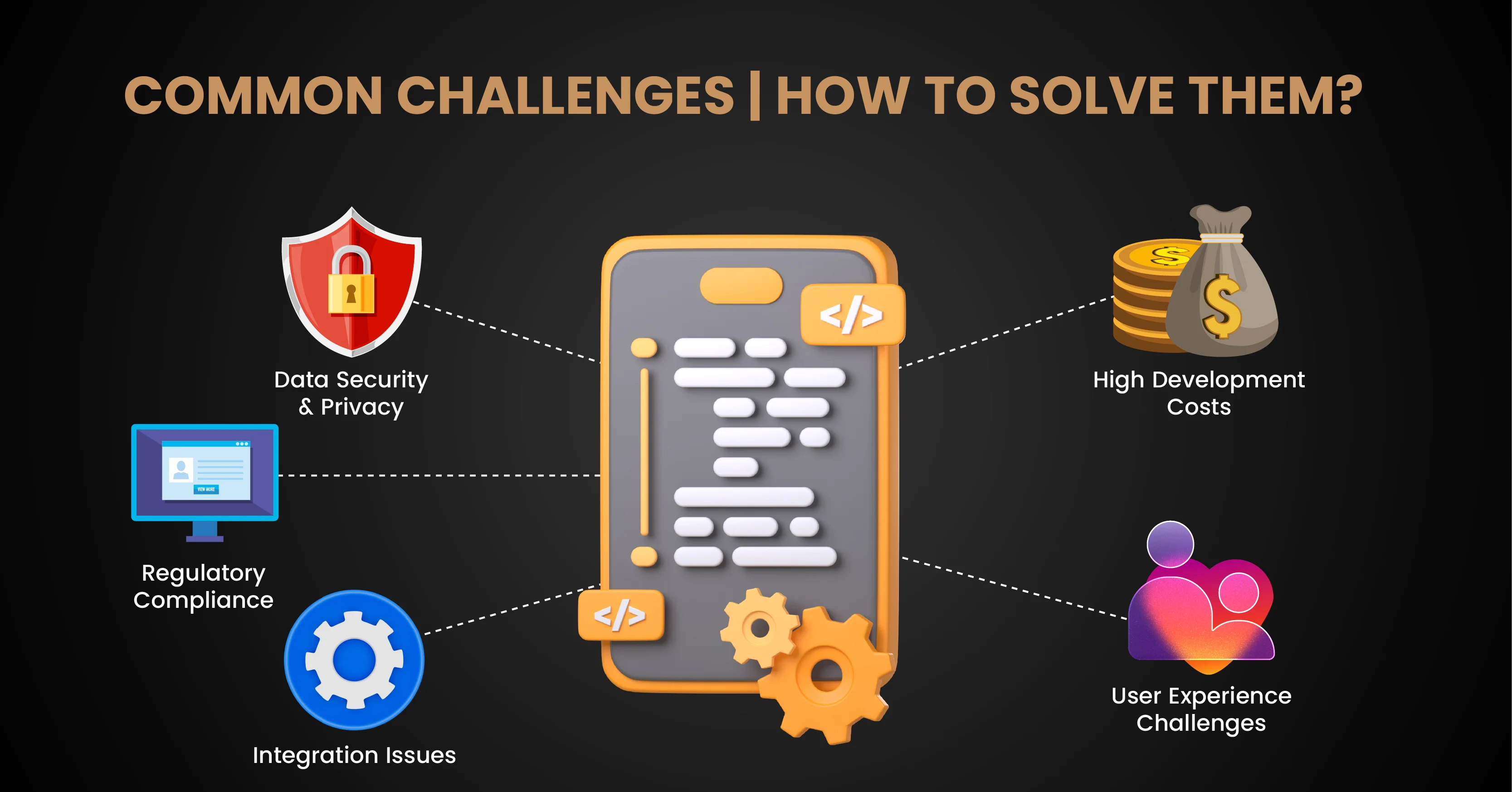
Below are the main pain points businesses face when building healthcare apps, with practical mitigation strategies.
Problem: Apps handle Protected Health Information (PHI). A breach risks patient harm and heavy fines.
Solution: Adopt a defense-in-depth approach — end-to-end encryption (data in transit and at rest), strong authentication (MFA + device attestation), secure key management, and regular penetration testing. Implement fine-grained access controls and audit logging. Work with healthcare mobile app development companies that provide security documentation and third-party test reports.
Problem: HIPAA, GDPR, and local medical device rules are complex. Noncompliance is costly.
Solution: Classify the app early (Is it a medical device? A wellness app?). Build policies and technical controls aligned to applicable laws — data minimization, patient consent flows, data portability, and DPO/Privacy Officer responsibilities. Engage legal counsel familiar with healthcare regulations in your target markets.
Problem: Connecting to Electronic Health Record (EHRs), labs, or device APIs is inconsistent and fragmented.
Solution: Use standardized interfaces (FHIR, HL7, SMART on FHIR) wherever possible. Design an integration layer in your backend that abstracts provider systems and normalizes data. Allow for phased integration. Start with key workflows and then expand.
Problem: Secure, compliant apps cost more than consumer apps.
Solution: Prioritize an Minimum Viable Product (MVP) that delivers core value (e.g., teleconsultation + secure messaging). Use proven frameworks, cloud healthcare offerings, and open standards to reduce build time. Consider partnering with a specialist healthcare mobile app development company like KodersPoint with reusable modules for authentication, audit logs, and HIPAA-compliant hosting.
Problem: Medical accuracy vs. simple UX. Clinicians and patients have different needs.
Solution: Run early user research with both patient and provider representatives. Use role-based UIs, progressive disclosure (show detail on demand), clear clinical disclaimers, and accessibility best practices (WCAG). Invest in onboarding and education flows.
 Also read: eCommerce Mobile App Development | How to Choose the Right Company?
Below is a list of the steps app developers follow to build healthcare applications.
Costs may vary with scope, compliance needs, and integrations. Here is a simplified breakdown.
Healthcare providers and startups usually spend between $80,000 and $150,000 to develop a healthcare app. Start with a focused MVP, reuse third-party HIPAA-compliant services, and phase integrations to manage costs.
When engaging healthcare mobile app development services USA or global vendors, ask for a detailed cost breakdown (design, backend, integrations, QA, compliance work).
You may also want to read: Custom WordPress Development | Challenges and Best Practices
Apps power many clinical and operational workflows. Some of them are as follows.
Successful apps demonstrate measurable outcomes, e.g., improved adherence, reduced readmissions, or time saved for providers.
Profitability depends on the business model and market fit. Common models include:
Carefully validate your revenue model early and ensure your pricing accounts for ongoing compliance, hosting, and support costs.
When evaluating a healthcare mobile app development agency or best mobile app development companies for healthcare, ask:
Prefer companies that show clinical understanding, can produce work samples, and have a test environment that demonstrates compliance controls.
Define KPIs such as:
Collect both quantitative and qualitative feedback. Clinical validation is a strong trust signal for buyers.
Summing Up
Healthcare mobile app development is high-reward but demanding. Success requires pairing strong technical engineering (iOS/Android, secure backends) with clinical domain knowledge, rigorous compliance, and user-centered design.
Use phased delivery — start with an MVP, validate with clinicians and patients, and expand with secure integrations. When looking for healthcare mobile app development services or a healthcare mobile app development company, prioritize those who understand HIPAA/GDPR, FHIR/EHR integrations, and human-centered design.
How long does it take to build a healthcare app?
Timelines may vary. A simple app can take 3 to 4 months; complex, regulated apps often take 6 to 12 months (or even more) including validation and compliance work.
Should I build native or cross-platform?
Native (Swift/Kotlin) offers best performance and device access; cross-platform (React Native/Flutter) can speed development and lower cost — choose based on features and device requirements.
How do I ensure HIPAA compliance?
Implement technical safeguards (encryption, access control), sign BAA with vendors, document policies, and perform regular risk assessments.

Let's talk about your tech solutions.